NEWS 20260318
2026.03.18 / ARTISTS
Artist Isshin Tanizaki's solo exhibition "Nagi" will be held at Koumyouin, the pagoda of Tofukuji Temple, Kyoto, from Saturday, March 28, 2026. He depicts the cycle of nature and life.
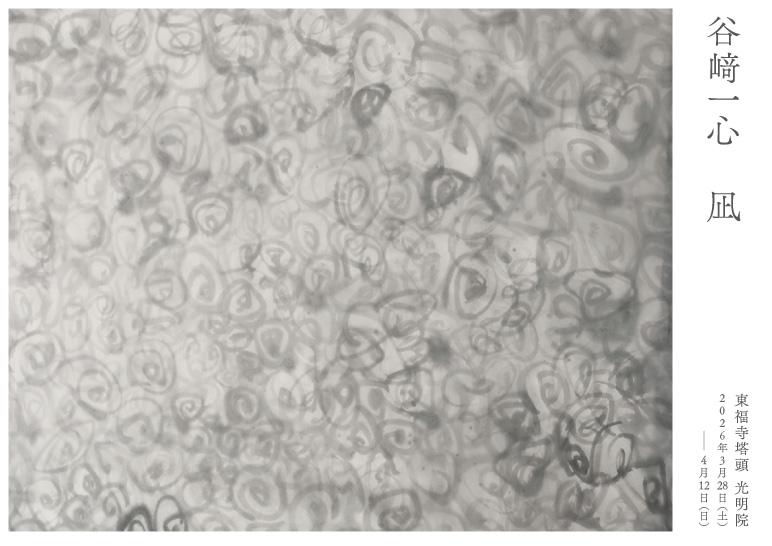
Artist Isshin Tanizaki's solo exhibition "Nagi" will be held at Koumyouin, the pagoda of Tofukuji Temple, Kyoto, from March 28 (Sat) to April 12 (Sun), 2026.
This solo exhibition will be held at Koumyouin, the pagoda of Tofukuji Temple, and will feature mainly new works by Isshin Tanizaki. The exhibition will feature 12 sliding door paintings in ink, a first for Tanizaki, including a painting depicting a vortex as a symbol of landscape and life energy in the serene space of a Zen temple. Through an exhibition that echoes the garden and temple landscape, the exhibition presents a new viewing experience in which the paintings and the surrounding environment are interwoven in the historic temple setting.
EXHIBITION OVERVIEW
Isshin Tanizaki Solo Exhibition "Nagi
Dates: Saturday, March 28 - Sunday, April 12, 2026
Venue: Koumyouin, the pagoda of Tofukuji Temple
Hours 7:00 - until sunset
Address: 15-809, Honmachi 15-chome, Higashiyama-ku, Kyoto, 605-0981, Japan
Worship fee 500 yen
*Prayer fee is required to view the works.
Opening Reception
Saturday, March 28, 2026 18:00 - 20:00
Artists are scheduled to be present.
Inquiries about our works
STATEMENT
This exhibition will present "Nagi," a work of art created by feeling "Hashinniwa," a dry landscape garden by Mirei Shigemori, one of the most famous gardeners of the Showa period.
In the "Hashinniwa," numerous garden stones, including the Sanzun Ishigumi, and cloud-like azalea trimmings are eye-catching. In the midst of them, we had a dialogue with the flow of white sand as the sea that received the stone arrangement.
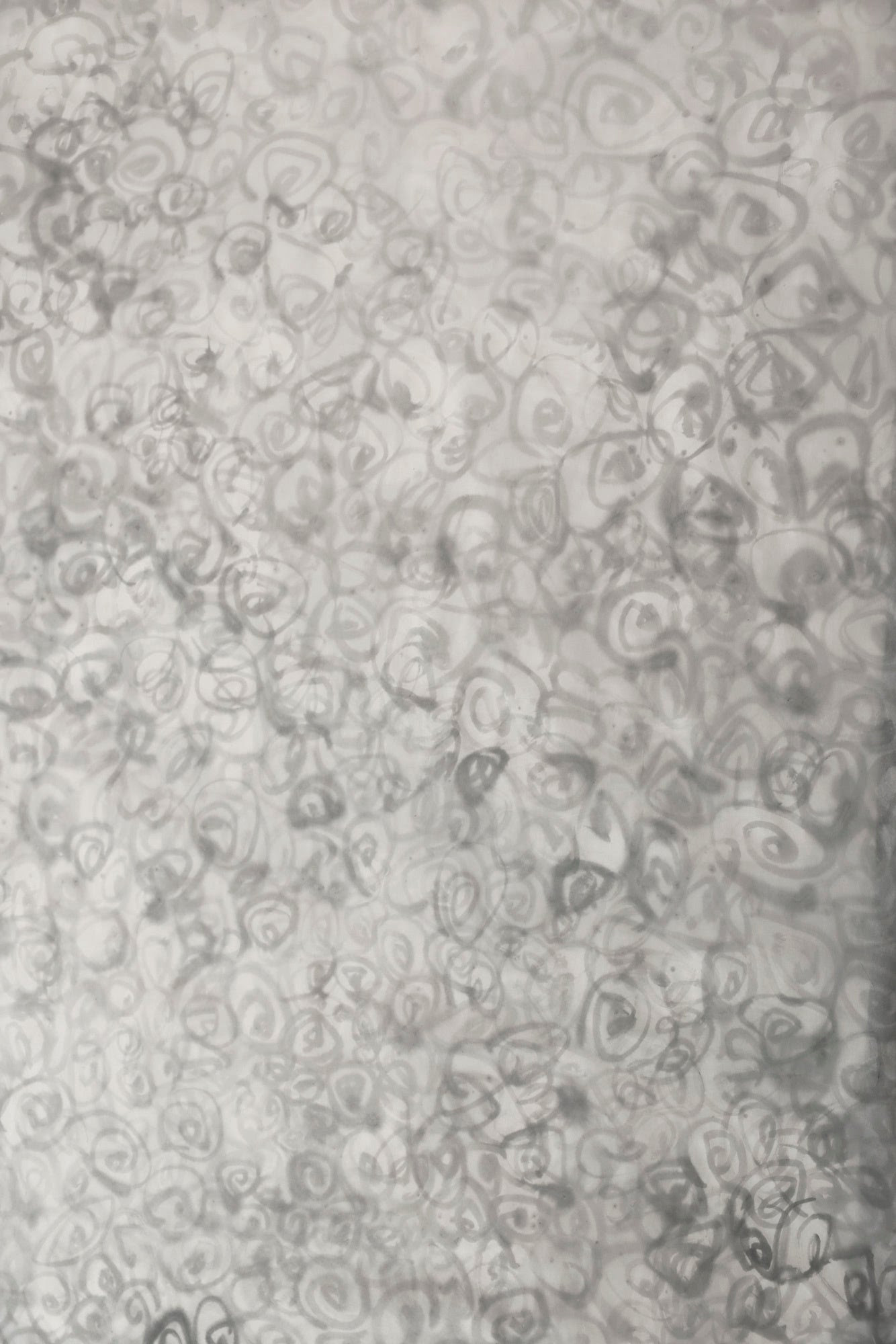
As I watched the gentle flow of white sand, there was a momentary calm in time and space, and as my mind became calmer, realizations and flashes of light floated in and out. In the momentary calm, the white sand stream was transformed into a wave of vortexes that showed light as intuition, and eventually appeared as an image in a painting. This is the work "Nagi".
We hope that you will sit peacefully in the temple grounds, gazing at the garden, sliding doors and paintings, putting aside the hustle and bustle of daily life, and enjoying a dialogue with your innermost self, even if only for a few moments.
Isshin Tanizaki
PROFILE
Isshin Tanisaki
Born in Fukuoka, 1974
Isshin Tanizaki's theme is "the energy and circulation of life," and his work combines color and texture to create vortexes that symbolize the movement of energy, expressing the energy of life.
Since the beginning of 2000, Tanizaki has been presenting natural landscapes created by the accumulation of fine dots, which is also the origin of the vortex. By positioning the vortex as the root of all things in the universe, and by expressing the world of the vortex in a minimalist manner, Tanizaki examines our lives caused by the movement of energy, and the origins of the everyday world and the universe.
one-man exhibition
2018 Painting (Luca Scandinavia/Tokyo)
2022 Kouin (Lurf MUSEUM/Tokyo)
2023 Vortex (Lurf MUSEUM/Tokyo)
2024 Vortex, Memory of Color (Dansk Mobelkunst Gallery/Copenhagen)
2024 Cycle of Energy (Ginza Tsutaya FOAM CONTEMPORARY/Tokyo)
2024 Creation of Image (LURF GALLERY/Tokyo)
2025 FEEL (LURF GALLERY/Tokyo)
group exhibition
2024 "ART CONNECT" (BONDED GALLERY/Tokyo)
2025 "Breathing Painting - Intersection and Vortex: Nobuaki Maeda × Isshin Tanizaki" (LURF GALLERY/Tokyo)
2026 "IMAGINATION" (LURF GALLERY/Tokyo)
Instagram|@isshintanisaki_official
The Chinese character for “saki” is "tatsusaki.”
Koumyouin, the pagoda of Tofukuji Temple
It was founded in 1391 (Meitoku 2) at the beginning of the Muromachi period (1392-1573) by Myochasa Kinzan, the head priest of Tofukuji Temple.
Marishiten, the guardian deity of victory, is enshrined in the front garden, Unreiniwa, just inside the temple gate.
The main garden, Hashin-tei, which is also known as "Rainbow Koke-dera," is a dry landscape garden created by Mirei Shigemori, a Showa-era garden designer, in 1939 together with the Hojo Garden of Tofukuji Temple.
The Hashin-tei Garden, a Heian-style garden in the Shuhama style, is different from the Hojo Garden in that it is named after the temple's name, Koumyou, and consists of three stone arrangements floating on white sand representing the ocean, with standing stones lined up in a diagonal line.
Behind them, azaleas and azaleas are given a dynamic cloud pattern as a large cut, and if you look up, you can see the tea pavilion "Luogetsuan".
Rōgetsu-an was built in 1955. Its name comes from the Zen saying "Muyun sōsei reinejo aruzuki oraku wa shin" (Clouds do not grow on the mountain tops, and the moon does not fall on the waves).
The windows, walls, and shoji screens are decorated with moon motifs, and the moon rising in the eastern sky can be enjoyed by viewing it from the garden of Hashin.
The Marishiten is sometimes depicted riding on the moon, and the exquisite and skillful arrangement, which is consistent from the temple name, Koumyou, to the Luogetsuan, provides a beautiful scene and a sense of peace.
If one shuns the troubles, the moon (Buddha's heart) will be reflected in the waves.