Solo Exhibition: No Signal

We are pleased to announce that LURF GALLERY 1F will be hosting a solo exhibition by Teppei Miyake titled “Outside the Circle.”
Through the geological and mineral cross-sections etched into the land, Miyake has explored the time and history that lie behind our daily lives.
This exhibition explores the coal seams in Iizuka City, Fukuoka Prefecture, and the mountain sand strata in central Chiba Prefecture, seeking out places where the long span of natural time and human activity intersect.
Coal is the result of the transformation of plants that lived tens of millions of years ago, and it was also a resource that supported Japan’s modernization. Furthermore, while mountain sand from Chiba has supported urban development in the Tokyo metropolitan area, its extraction has also significantly altered the landscape of the region. Miyake’s works trace the time and history underlying these materials, bringing to light the layers of time and land that lie behind the present moment in which we stand.
The title “Outside the Circle” conveys the idea of proactively engaging with things that lie beyond the scope of our awareness and interests. In today’s world, where we are surrounded by information, we find the potential for new insights and discoveries in the time, history, and presence of others that lie beyond that realm. We hope you will enjoy exploring Miyake’s artistic world—where time, place, and history intersect—through this exhibition.
EXHIBITION OVERVIEW
Teppei Miyake Solo Exhibition: “Outside the Circle”
| Meeting Period | Friday, July 3, 2026 – Monday, August 3, 2026 |
| Venue | LURF GALLERY 1F |
| Hours | 11:00 - 19:00 |
| Address | Roob1, 28-13 Sarugaku-cho, Shibuya-ku, Tokyo 150-0033, Japan |
STATEMENT
I started digging into the “strata” because I was making a tombstone.
Funeral rites in Japan, stemming from the temple-parishioner system of the Edo period, form the foundation for defining the existence of the deceased through what is known as “funeral Buddhism.” However, changes in religious views, the trend toward individualism, and the declining birthrate and aging population led me to reconsider how absence is expressed in Japan—and that was the beginning of my work creating tombstones.
However, as I worked on creating these tombstones, I unexpectedly found myself confronted with the reality of oblivion—the self-evident fact that countless dead lie buried, and that most of us, too, will eventually be forgotten. The act of “digging through the strata” was what I began as a way to affirm the existence of these countless beings who cannot exist, and as an attitude toward this vast, invisible history.
In 1788, the geological concept of “deep time”—discovered by James Hutton through the Siccar Point unconformity—was not the past as perceived by human notions of time, but rather an external discovery beyond human recollection. Yet at the same time, geological strata, just like us humans, possess their own unique history, down to every single grain of sand. Even if geological strata appear to us as results, in deep time they are processes; weathering is a form of creation, and it is not oblivion but transformation.
Just as the calcium that makes up our bones was once foraminifera drifting in the ocean, and just as the iron in the blood flowing through our bodies was created by the explosion of a star, we are literally built upon deep time. Perhaps the reason we find beauty and a small measure of comfort in geological strata is that we—who usually live within such a brief span of time—are touching a part of ourselves that exists within deep time, a concept so vast that it transcends even the notion of loss. The strata teach us that if we dig beneath our feet, it is indeed there.
Teppei Miyake
ART WORKS

Sand Vessel, 2025, geological strata (Ichijuku Formation), polyester resin, putty, urethane coating, UV-blocking clear coat, W49 × H46 × D36.5 cm
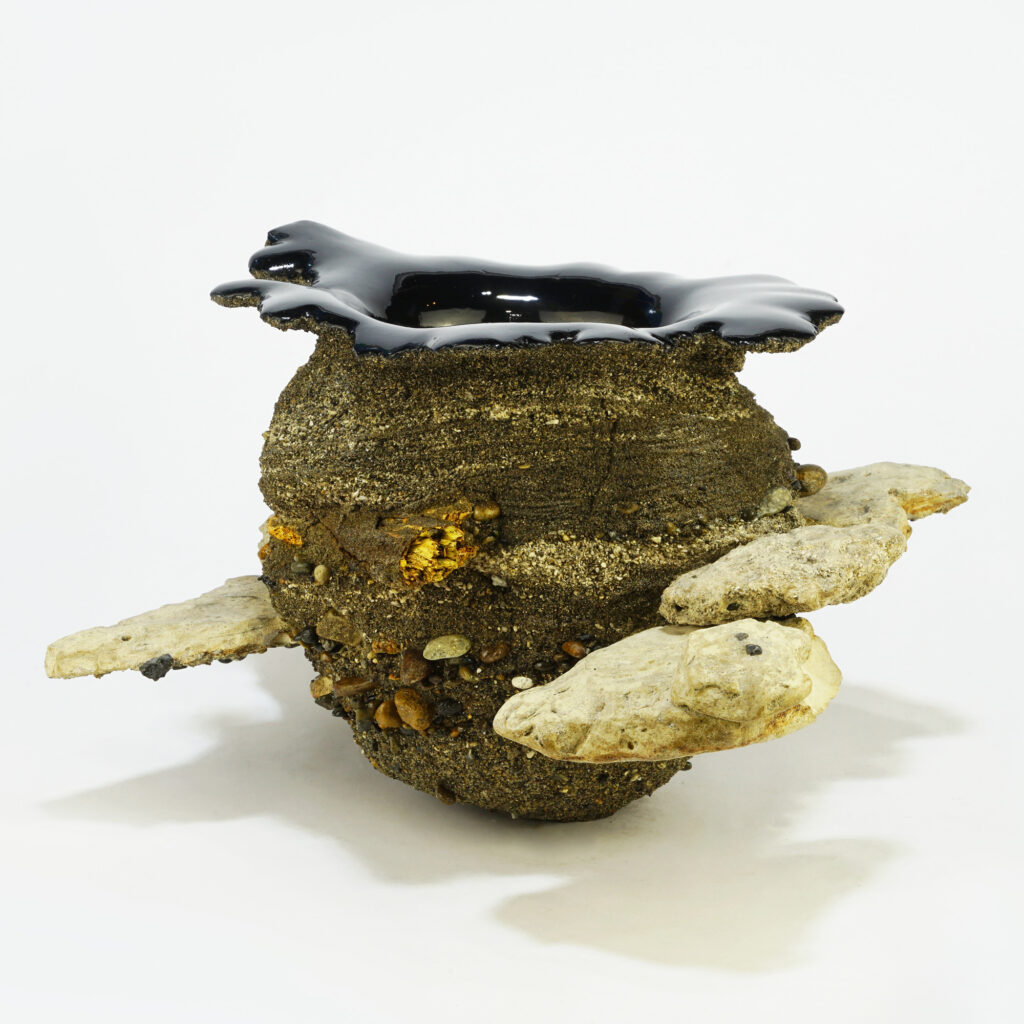
Sand Vessel, 2025, geological strata (Ichijuku Formation), polyester resin, putty, urethane coating, UV-blocking clear coat, W41.5 × H22 × D37 cm
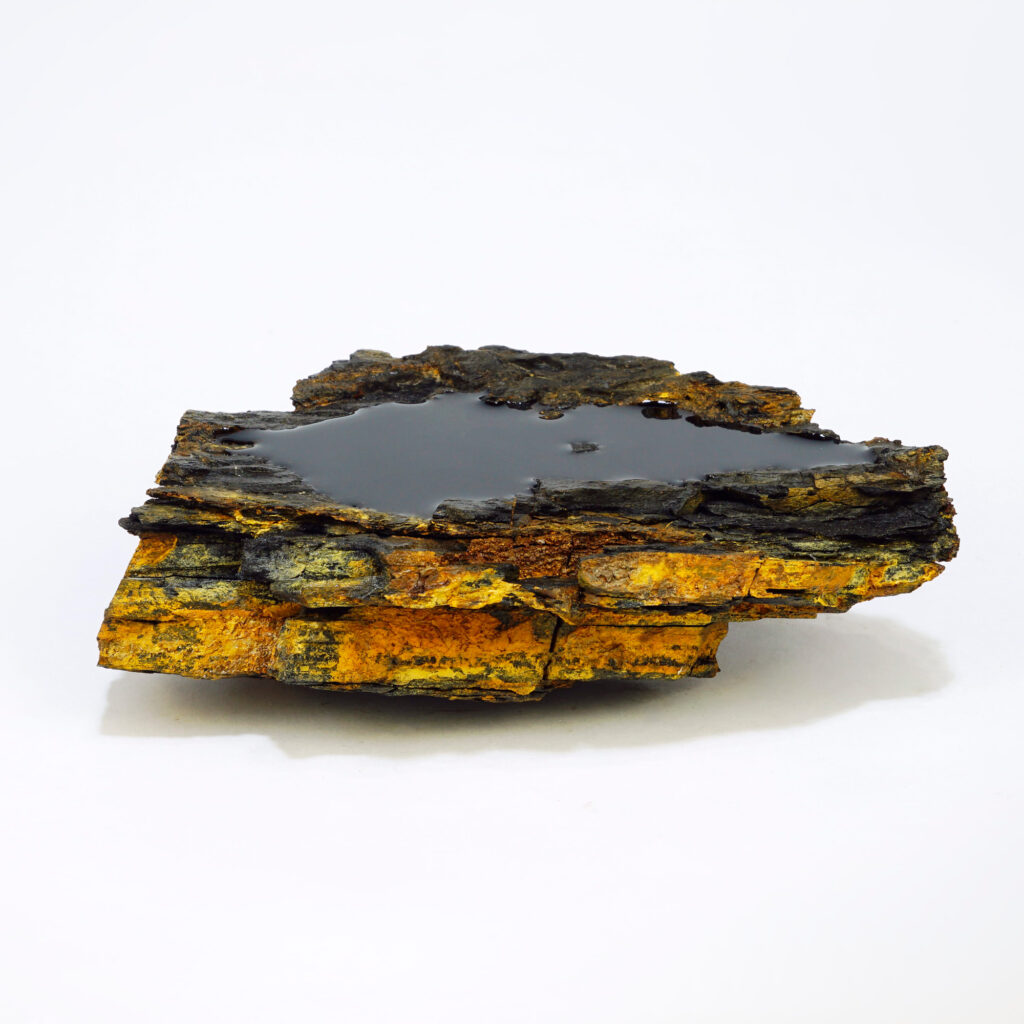
Mining, 2025, Geological strata (coal seam), epoxy resin, UV-blocking clear coating, W17 × H5.5 × D14 cm
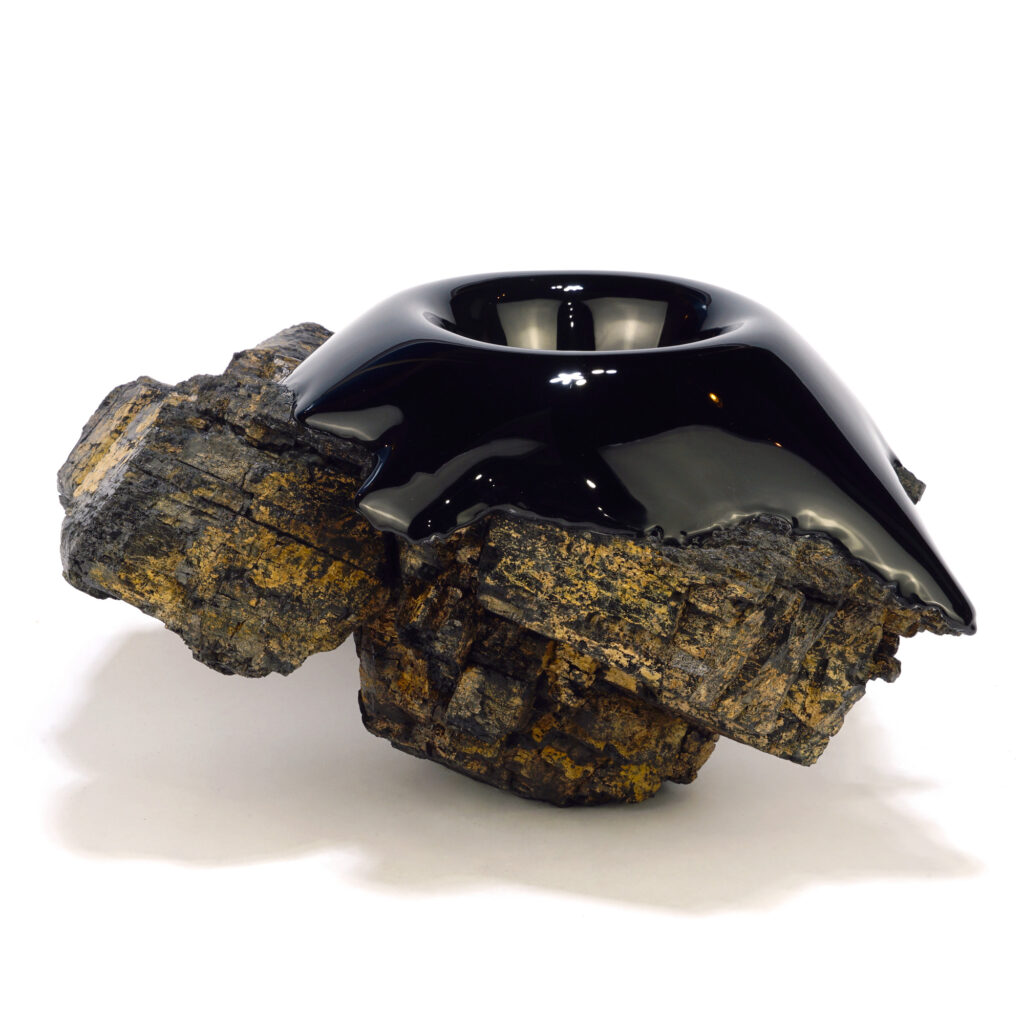
Mining, 2026, Geological strata (coal seam), polyester resin, putty, urethane coating, UV-blocking clear coat, W32 × H15 × D25 cm
ARTISTS
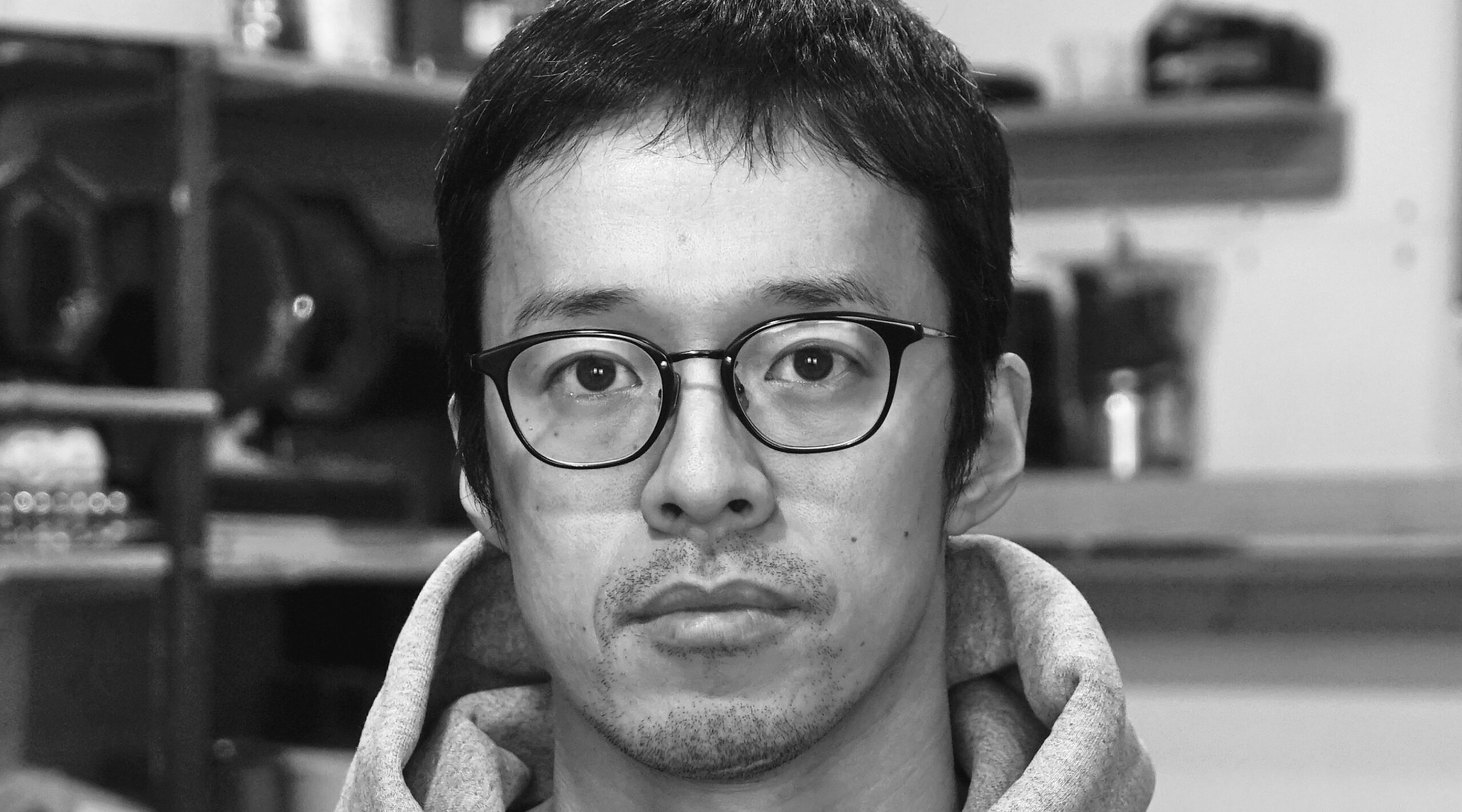
Teppei MIYAKE
Teppei Miyake
| 2007 | Graduated from the Department of Painting, Division of Japanese Painting, Faculty of Fine Arts, Tokyo University of the Arts |